What is ecommerce personalization?
Ecommerce personalization is the practice of tailoring the shopping experience, what a visitor sees, the products you recommend, the messaging, the offers, to that specific person, based on what you know about them. The shift is simple: from one static store shown to everyone, to a store that reshapes itself around each shopper's intent.
That can be as small as showing returning customers the category they always buy from, and as big as a fully guided experience where a shopper answers a few questions and gets a shortlist built just for them. Same underlying idea: relevance beats volume. Showing someone the right three products converts better than showing them all three thousand.
A line to keep in your head: personalization isn't about showing people more. It's about showing them less, just the right less.
Why it matters (more than it used to)
Three forces turned personalization from "nice to have" into the thing that decides whether your ad spend pays off.
Acquisition got expensive, so every visitor has to work harder. When you're paying premium prices for traffic, letting most of it bounce isn't a marketing problem, it's a margin problem. And the numbers say personalization is the lever: McKinsey's Next in Personalization research found it can reduce customer acquisition costs by as much as 50%, lift revenues by 5 to 15%, and increase marketing ROI by 10 to 30%, with the fastest-growing companies pulling 40% more of their revenue from personalization than slower ones. That's the whole game: earning more from the visitors you've already paid for instead of just buying more of them.
Choice paralysis is real, and it's quietly killing your conversion rate. In the famous Iyengar & Lepper "jam study", a display of 24 jams drew more foot traffic than one with 6 jams, but the smaller display sold ten times better: 30% of shoppers bought when shown 6 options, versus just 3% when shown 24. More choice pulled people in and then froze them. Your collection page with 200 SKUs is that 24-jam table. Personalization cuts it back down to a decision.
Shoppers now expect it. McKinsey's consumer research puts it plainly: 71% of consumers expect companies to deliver personalized interactions, and 76% get frustrated when it doesn't happen. A one-size-fits-all store now reads as "this brand doesn't get me," and shoppers will happily go find one that does.
The six ways to personalize on-site
Personalization isn't one feature, it's a set of components that work across the whole journey, from the first click to the fifth repeat order. Here they are, roughly in the order a shopper meets them, with our take on where each earns its keep.
1. Product finders and quizzes
Our take: the highest-ROI place to start for most catalog-heavy stores.
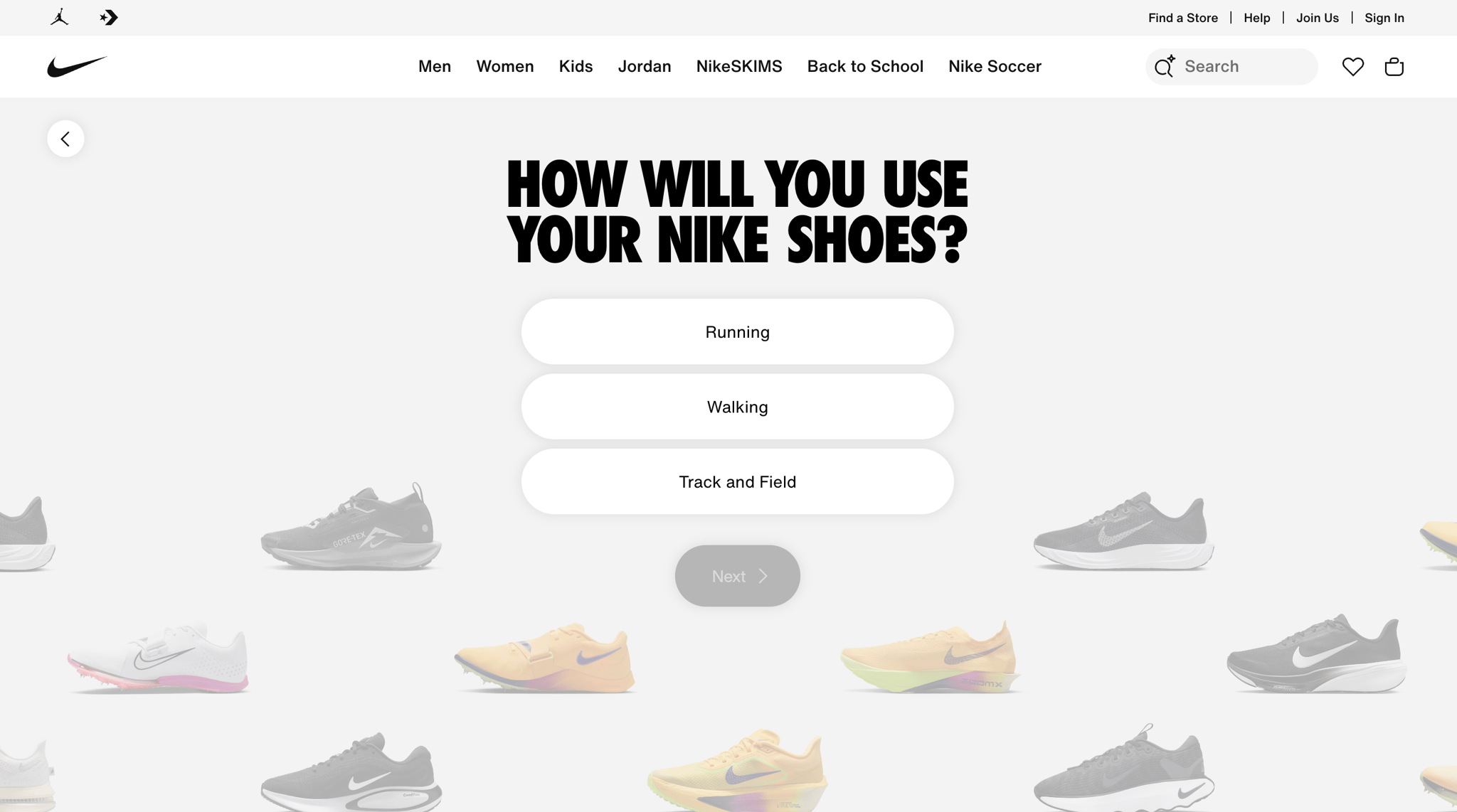
A product finder or quiz asks the shopper a few plain-language questions and hands back a tailored recommendation instead of a wall of SKUs. It does two jobs at once: it personalizes the experience in real time, great for first-time visitors you know nothing about yet, and it collects the shopper's answers as data you can use everywhere else. Full breakdown in the complete guide to product recommendation quizzes and finders.
2. Quiz funnels and landing pages
Our take: the fix for wasted ad spend. Sending a paid click to a generic collection page is setting money on fire.
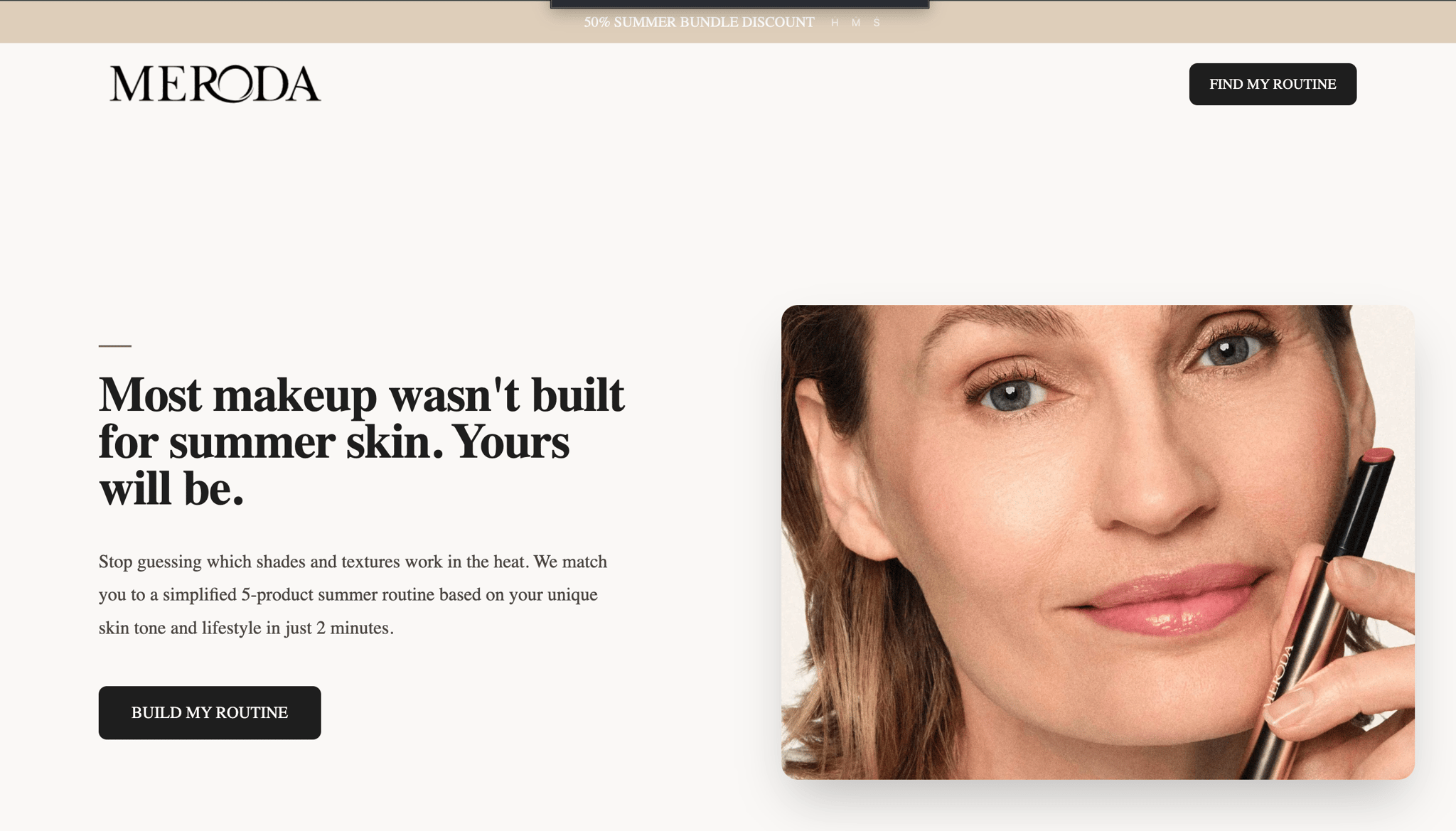
Where paid traffic lands matters enormously. A quiz funnel matches the message of the ad, asks what the shopper needs, and routes them to the right product, with an email step that turns one click into a lasting profile. That's the start of a proper funnel rather than a dead end.
3. Product recommendations
Our take: valuable, but only as good as the signal behind it.
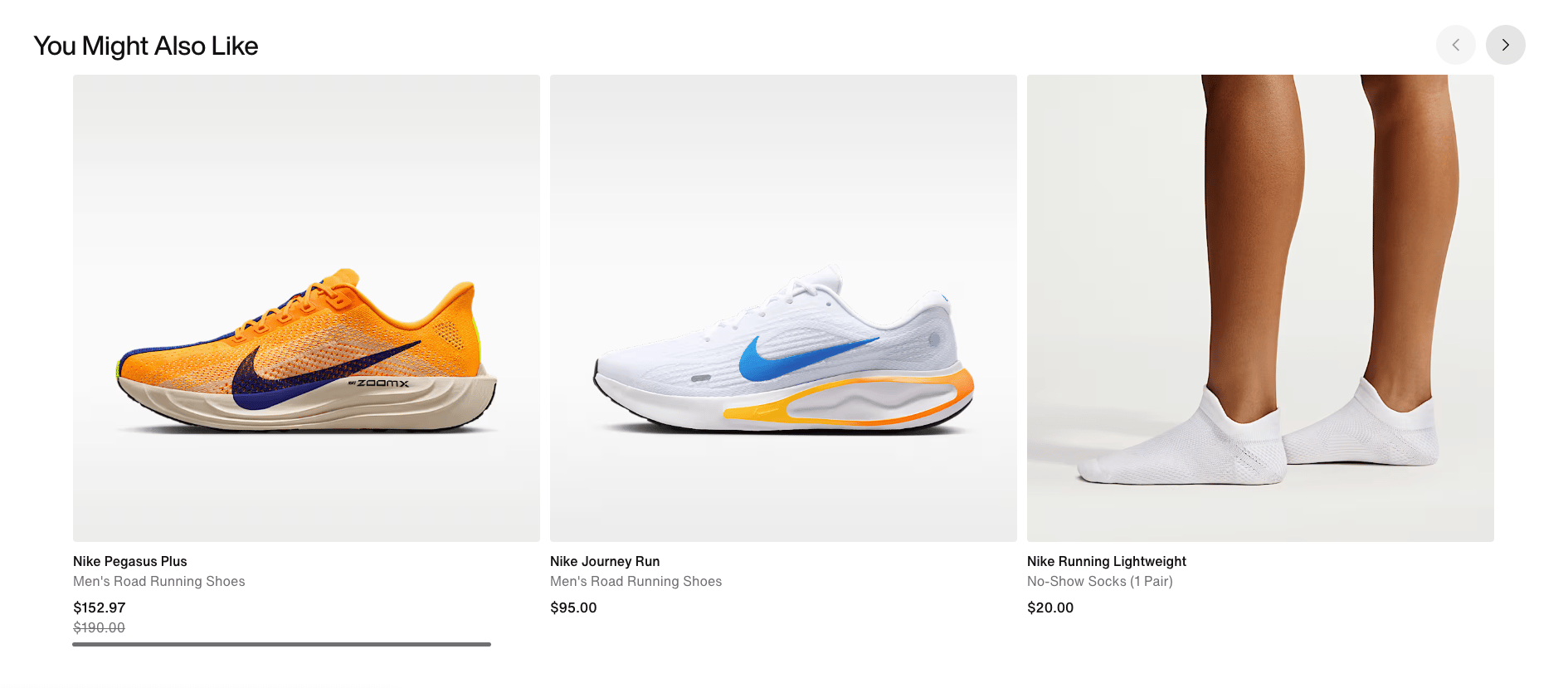
The classic. "You might also like," "frequently bought together," "customers also viewed." Done well, product recommendations lift average order value and surface things shoppers would never have searched for. The quality depends entirely on the fuel: behavioral data is the usual source; the better versions also factor in what a shopper explicitly told you, and the best versions factor in your margins. The same intelligence should also drive your merchandising, so the order of products on a category page adapts to the shopper and to what you actually want to sell.
4. Dynamic bundles
Our take: the shortest route from personalization to a higher order value.
Fixed bundles assume every shopper wants the same set. Dynamic bundles compose the set per shopper: a routine, a kit, a works-together combination built from what this visitor needs. When your products are used together, recommending the combination beats recommending the item.
5. Smart search
Our take: personalization's sharpest edge, because the shopper literally told you what they want.
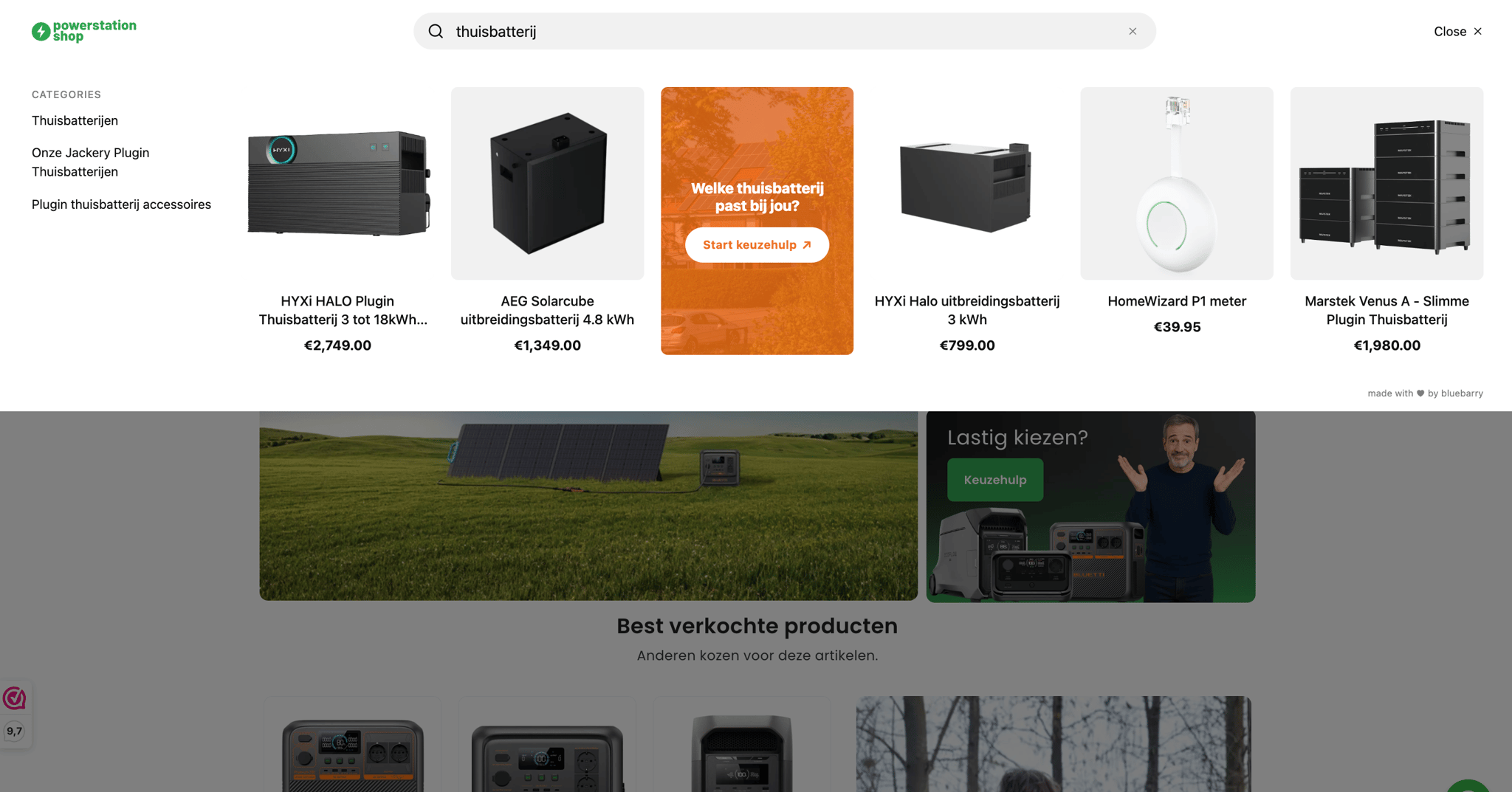
A shopper using search has handed you their intent in their own words. A personalized search experience understands synonyms and intent, ranks by relevance to that shopper, and never returns the dreaded "0 results." Searchers convert at a much higher rate than browsers, which makes search one of the highest-leverage places to get personalization right.
6. Smart popups, email and retention
Our take: where the profit actually lives. Personalization that stops at the sale is half a strategy.
The right message at the right moment beats interruption for everyone: a smart popup that reacts to what the shopper is doing, instead of greeting every visitor with the same discount. And beyond the visit, every answer a shopper gave in a quiz, every product they viewed, becomes fuel for email that's actually relevant: segmented flows, product-matched campaigns, win-backs that reference what they care about. Quiz and finder answers land as profile properties in Klaviyo, Omnisend or Reloadify, so your flows segment on what shoppers actually said.
The thing to notice: these aren't six separate projects. They're one loop. A finder captures intent, recommendations and bundles act on it, search sharpens it, email brings the shopper back, and every trip round the loop makes the next one smarter. Most brands buy these as disconnected tools that barely talk. The whole point of a personalization platform is that they share one brain.
What results look like
Numbers from stores personalizing with bluebarry. Results vary by catalog and traffic; these are published customer figures.
- Meroda (beauty) moved the conversation onto the product page with mini-quizzes. Within three months that one shift had built ~72,000 customer profiles, quiz takers were converting into buyers at 24%, and average order value was up 10%. Nothing about their traffic changed.
- Powerstationshop turned a technical catalog into guided funnels: a 124% conversion increase and email list growth of 200% in three months.
- Ergo2Work quiz takers convert 126% better across multi-language stores. As their marketing manager put it: "we have 100+ products on each listing page. That's hard to pick from."
- Decathlon runs 40 product finders across categories and languages, converting at 10%.
- Across our benchmark set of 130,000+ guided sessions, top performers complete 94% of started quizzes (median), earn €11 per quiz session, and make back roughly 55x the software cost in attributed revenue.
All ranges and reference points, per metric, are in the product quiz benchmark report.
See what personalization does on your store
Describe your store and AI drafts your first guided experience from your own catalog. Free for 14 days, no credit card needed.
The data that powers it: zero-party first
Personalization is only as good as the data feeding it, and this is exactly where most brands are quietly stuck.
Third-party data is information collected about a shopper by someone else and bought or borrowed. It was always inferred, leaky, increasingly regulated, and never really yours. First-party data is what you collect on your own store: clicks, views, purchases. Reliable, but all behavioral: you can see that someone looked at three tents; you don't know they're shopping for a festival next month, not a two-week hike.
Zero-party data is the good stuff: information a shopper intentionally and proactively hands you, the definition coined by Forrester. Declared, not inferred, so it's more accurate, fully consented, and genuinely yours to keep. The catch has always been collection: shoppers don't fill in surveys for fun. Which is exactly why quizzes and finders matter so much: a good one collects zero-party data as a byproduct of being helpful. We go deep in the zero-party data guide.
How to get started (without a data team)
- Find your highest-friction moment. Where do shoppers stall? Usually a big category page where they can't decide, a technical product page they can't decode, or paid traffic hitting a generic page. Start there, not everywhere.
- Start by collecting intent, not guessing it. The fastest way from "we know nothing" to "we can personalize" is to ask. A finder or quiz at that friction point helps the shopper now and starts building the data that powers everything else.
- Act on the data in more than one place. Capturing a shopper's answers and using them once is the most common own-goal in personalization. Pipe them into your recommendations, your search, your bundles, and crucially your email. One answer, used everywhere.
- Measure the right number. Not clicks, not engagement. Did personalization move people to cart, lift average order value, and bring them back? Revenue and repeat rate are the only scores that count.
- Then expand. Once one surface is working, roll the same intelligence into the next: search, bundles, PDPs, win-back flows. The loop compounds.
Choosing tools
Broadly, you've got two ways to buy personalization. Point tools solve one surface each: a search tool, a quiz tool, a recommendations tool. Each can be excellent in isolation. The problem is the seams: four tools that don't share data means four half-pictures of your shopper, four subscriptions, and a lot of manual duct tape.
A platform puts the surfaces under one roof, so data collected in one place feeds the others. This is where personalization actually compounds: the finder's answers sharpen the recommendations, which sharpen the email. Shared visitor identity across components is the feature to check for, because it is the one thing point tools cannot bolt on.
If you are evaluating software, see website personalization software. That page covers what's in the bluebarry platform, proof, integrations and pricing.
Frequently asked questions
Go deeper
Zero-party data
The data shoppers hand you on purpose, and why it beats tracking.
Product quizzes & finders: the guide
The highest-ROI personalization component, covered end to end.
PDP conversion optimization
15 fixes for the page where the buying decision actually happens.
Website personalization software
What's in the bluebarry platform: proof, integrations and pricing.
Stop wasting the traffic you pay for
Start with one friction point, collect intent instead of guessing it, act on that data everywhere, and measure profit, not clicks.