
Everyone tells you to "add a product quiz." Almost nobody shows you what a good one actually looks like once it's live and pulling its weight.
So instead of theory, here are five real stores running product recommendation quizzes: where they put them, what they connect to, and the specific move that makes each one work. Steal freely.
Want the how-to behind these? See How to Build a Product Recommendation Quiz.
1. Meroda: quizzes right on the product page
Catalog: Beauty · Stack: Klaviyo + Shopify
Meroda doesn't make you go hunting for their quiz. They put it where the hesitation actually happens: on the product page itself, as mini-quizzes and quiz funnels. A shopper unsure which shade or product is right gets guided in the moment, without ever leaving the PDP.
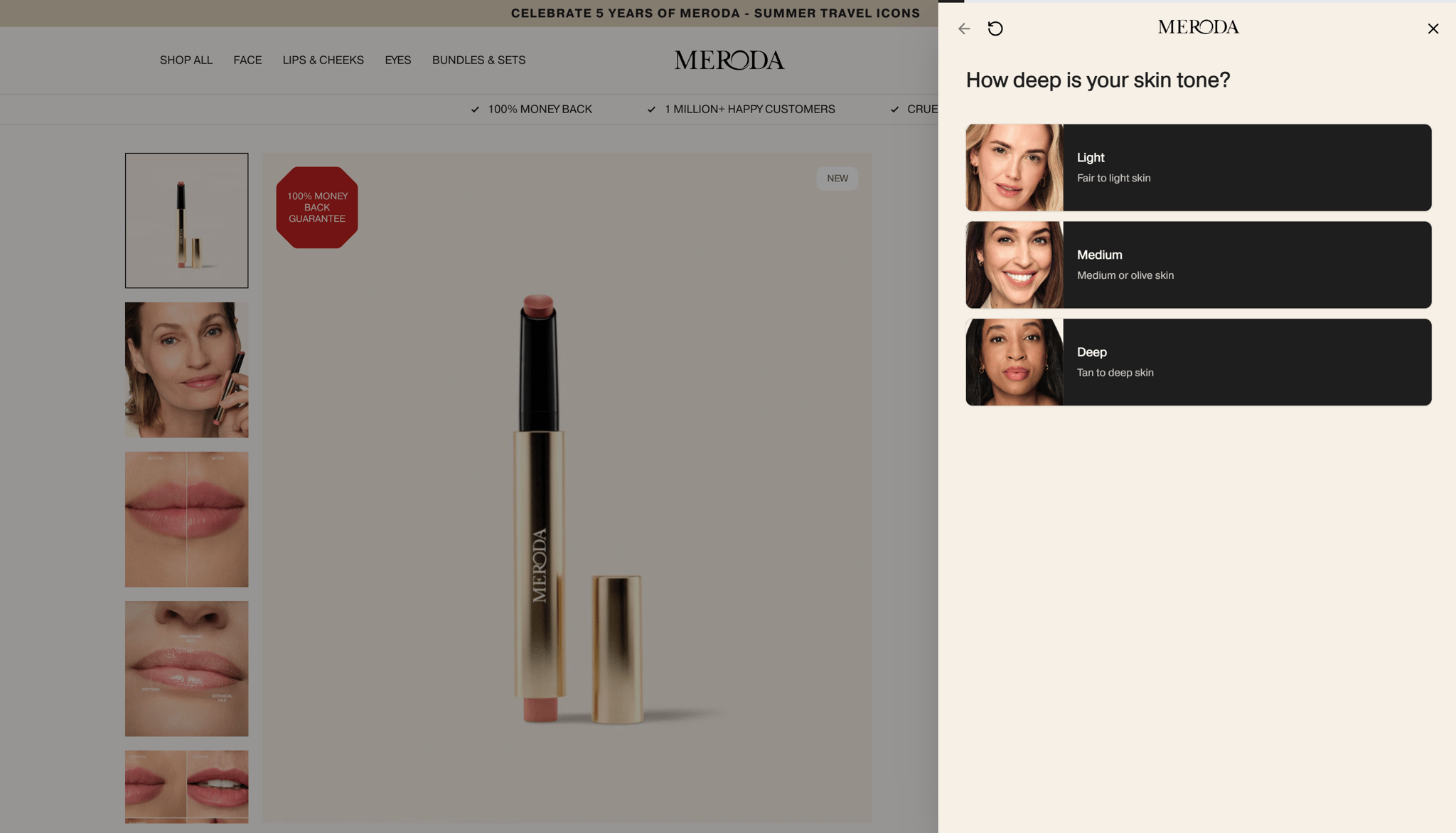
They also run quiz-driven funnels for Meta ads and bundled recommendations, so paid traffic lands in a guided experience instead of a cold product grid.
The result: ~100K emails captured in just 3 months, synced into Klaviyo, and 25% of everyone who takes a Meroda quiz converts into a buyer.
Why it works: placement. The quiz meets the shopper at peak indecision (on the PDP) and doubles as an email-capture engine: conversion and zero-party data from the same interaction.
2. Powerstationshop: guiding a technical catalog at every touchpoint
Catalog: Technical / power products · Stack: Omnisend + Shopify
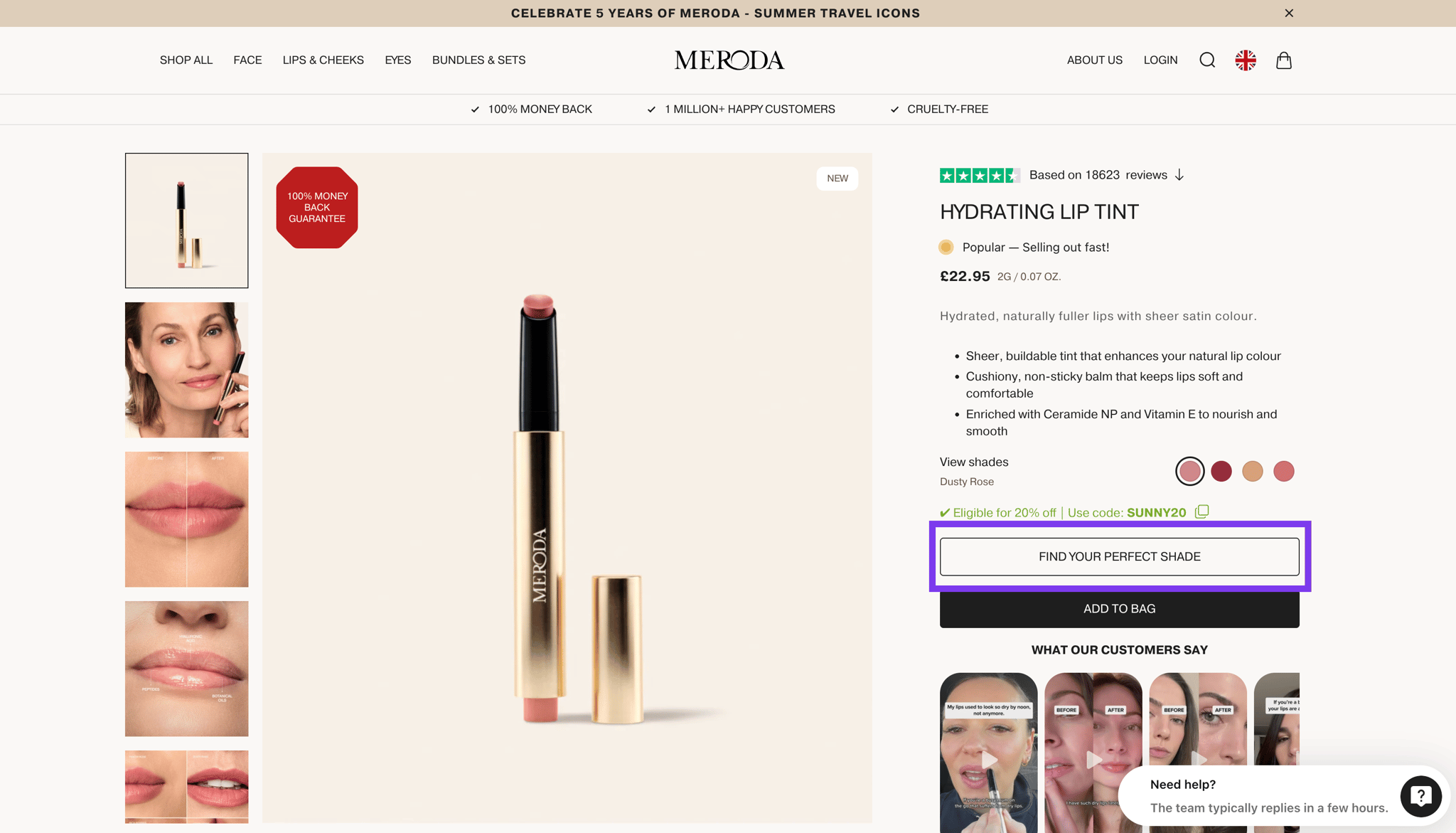
Powerstationshop sells considered, technical products, the kind where a shopper genuinely can't tell which option is right without help. Their answer: guide the buyer everywhere, not just once. Quizzes and finders run across:
- Product pages
- Category pages
- Popups
- Landing pages, funnels, retargeting and MOFU/TOFU campaigns
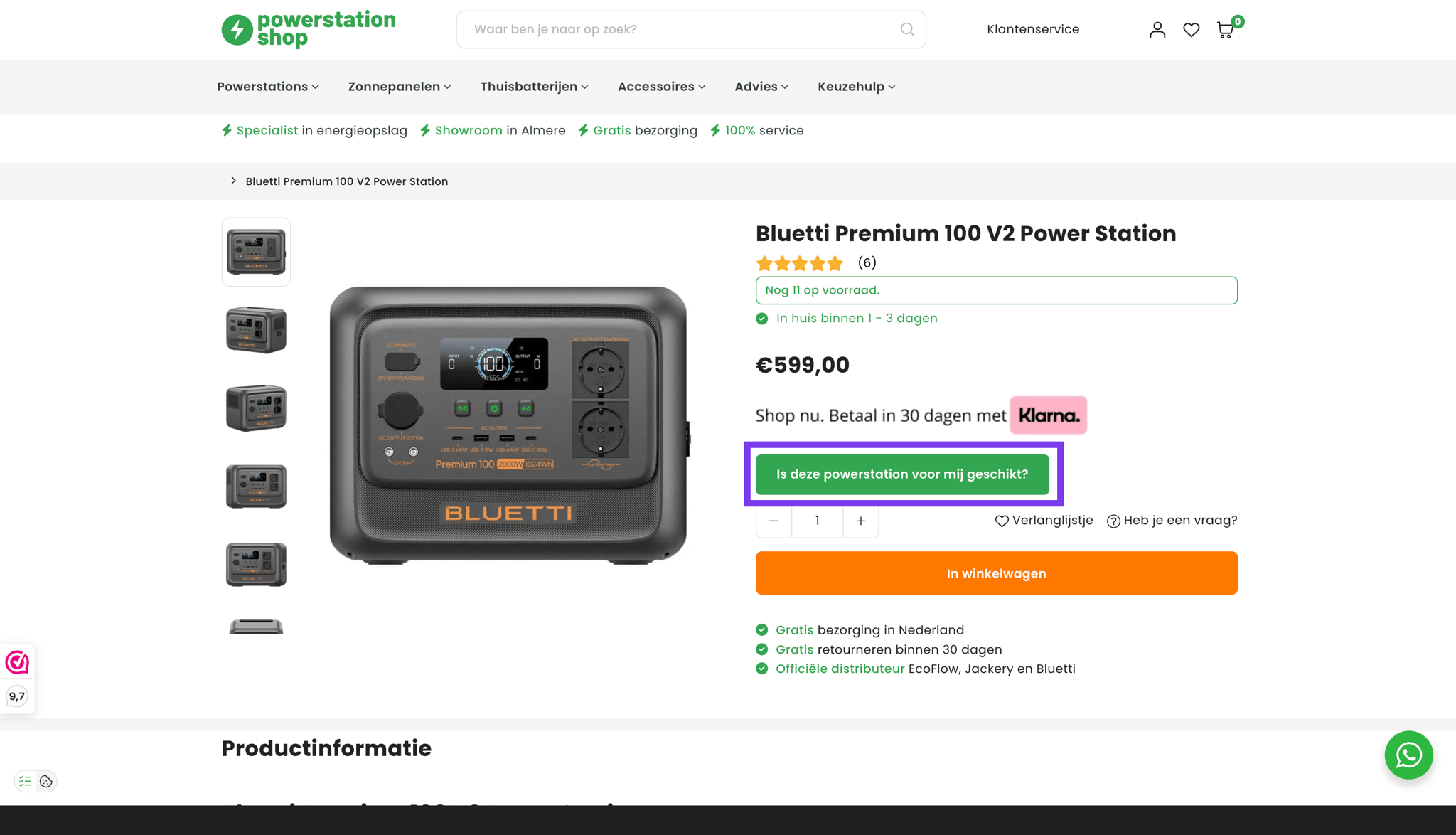
Why it works: a long, high-consideration customer journey needs guidance at every step. By placing finders across the whole path (and feeding the funnel with retargeting), they make sure no shopper is ever left alone to decode specs.
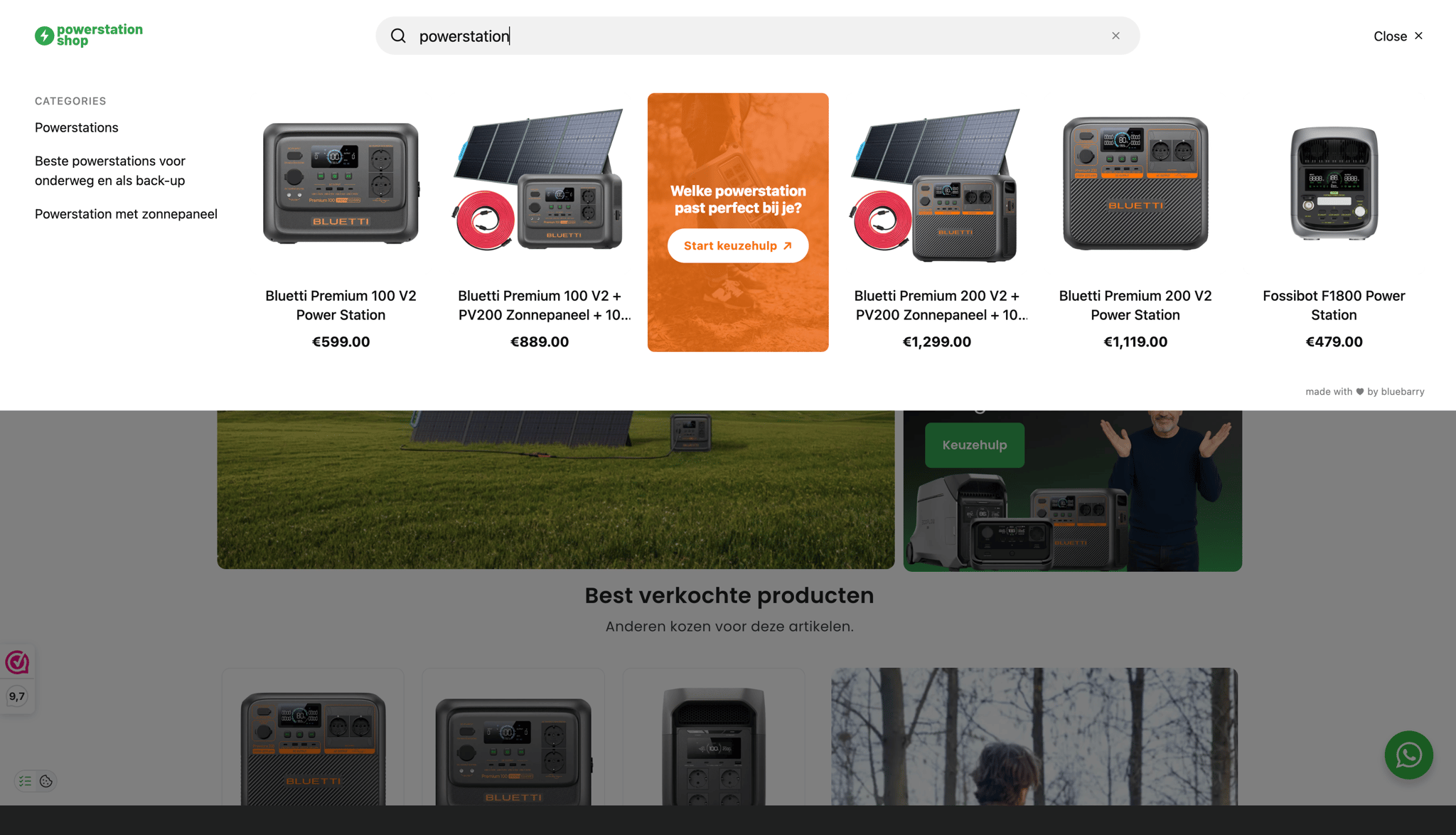
The result: shoppers who take a quiz convert 100% better (literally double), and Powerstationshop grew its email list 200% in three months.
"I'd been looking for a good product quiz and a helpful partner for almost a year. bluebarry stands head and shoulders above the rest." Mark Lammertink, Owner, Powerstationshop.eu
3. Huel: guided selling built into the whole site
Catalog: Food / supplements · Note: a public masterclass worth stealing from.
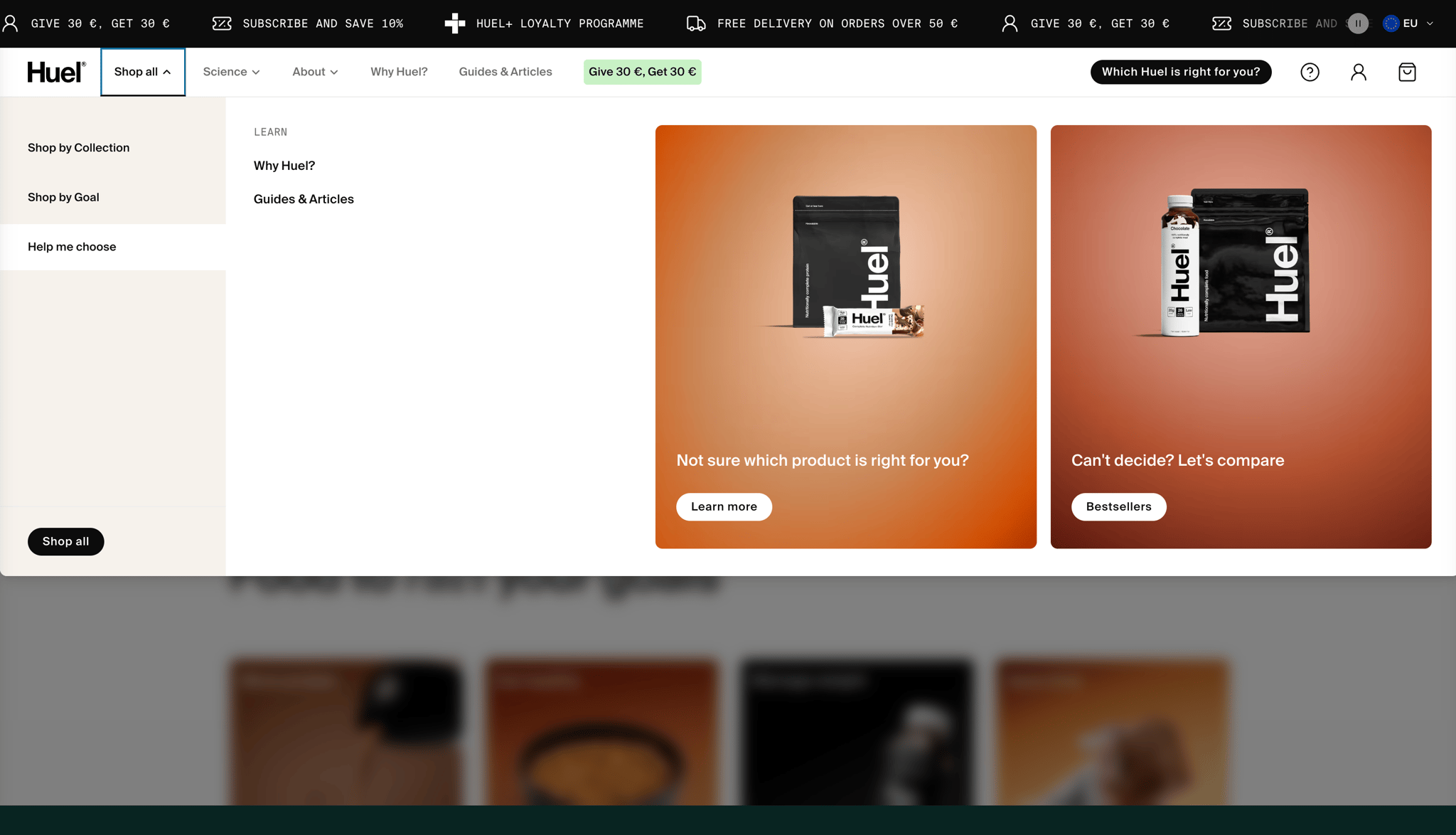
Huel treats guided experiences as a core part of the site, not a bolt-on. Quiz-style guidance shows up throughout, doing three jobs at once: segmenting their market, understanding customer profiles, and lifting conversion by matching each person to the right product instead of leaving them to guess.
Why it works: consistency and intent. When guidance is everywhere, every shopper gets routed to the right fit, and the brand learns who its customers actually are in the process.
4. Kampeerhal Roden: multi-category finders for cross-selling
Catalog: Camping & outdoor, 50,000+ SKUs · Stack: Shopware + Klaviyo + Channable
With camping and outdoor gear spanning 10+ categories, Kampeerhal Roden lists product finders across the range rather than relying on one central quiz. Each finder captures shopper intent and syncs to Klaviyo, which turns into cross-category selling (the shopper who came for a tent gets guided toward the sleeping bag and the stove).
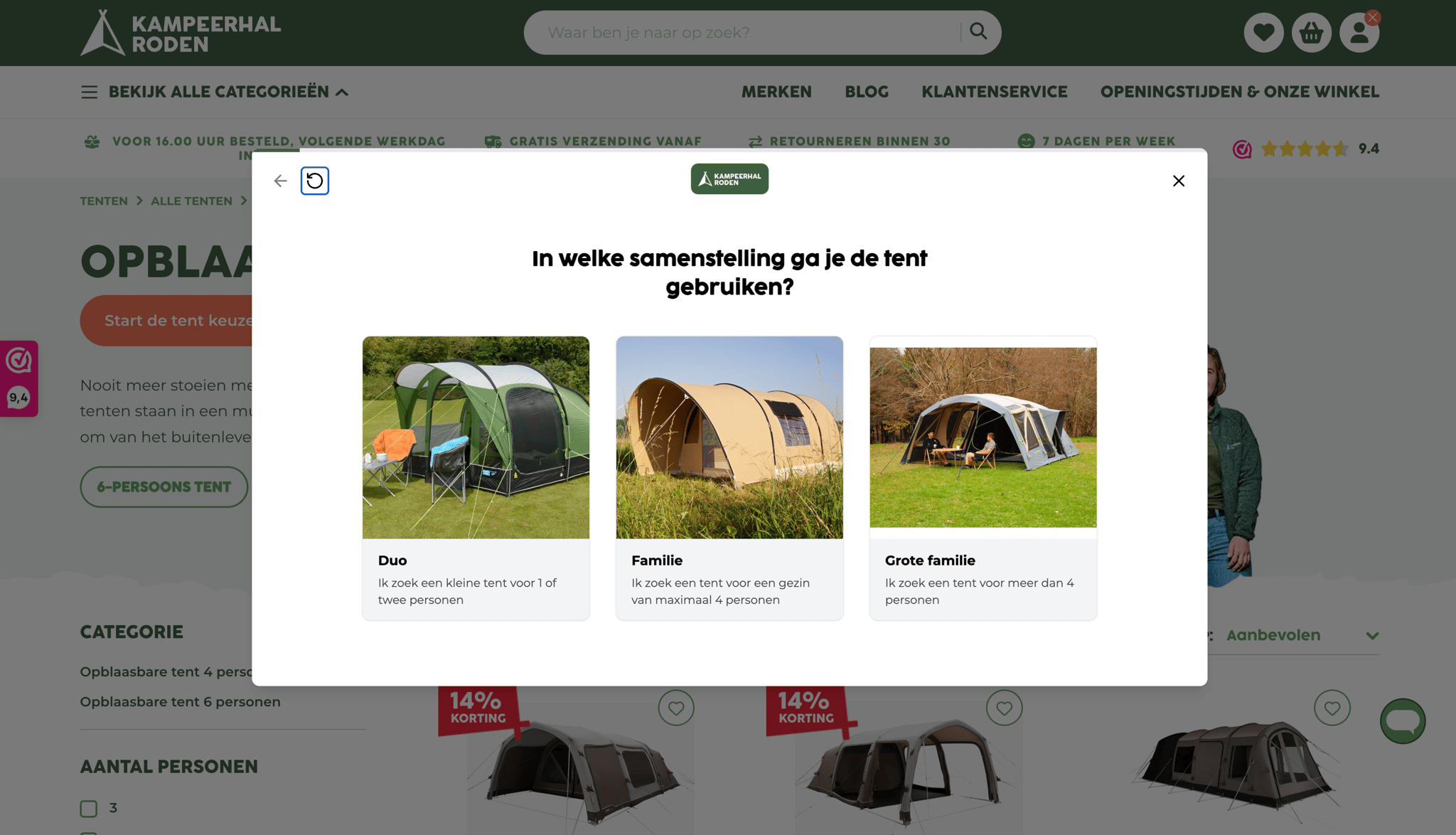
Why it works:at scale, one quiz isn't enough. Category-level finders capture intent everywhere and feed a data stack (Channable product feed + Klaviyo) that powers genuinely personalised follow-up and cross-sell.
Why it's worth stealing:if you have a broad, multi-category catalog, don't make shoppers find the one quiz. Put a finder in every category they browse.
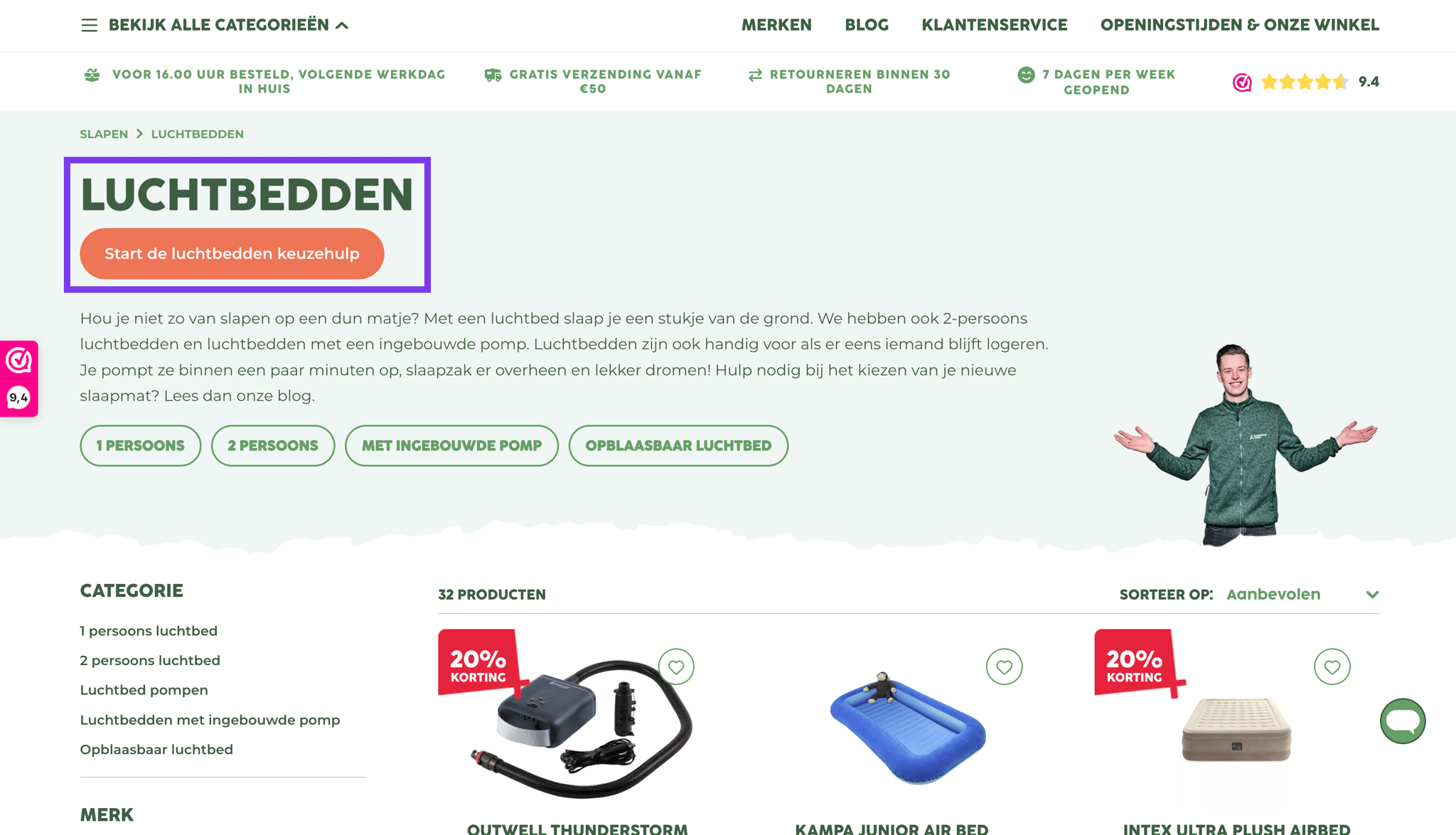
"With our product quiz funnels, we help visitors choose from more than 50,000 SKUs. Back when we used a different quiz builder, we spent hours setting up and maintaining quizzes. Now we connect our Channable feed and every quiz goes live on our Shopware shop in no time." Richard Kremer, CEO, Kampeerhal Roden
5. The Scent Nest: a perfume quiz that builds scent profiles
Catalog: Fragrance · The move: quiz funnels that build scent profiles
Perfume is almost impossible to sell online. You can't smell a PDP. The Scent Nest gets around that by turning the quiz into a scent-profiling tool: a few questions map each shopper to the fragrance families they'll actually love, then recommend matches.
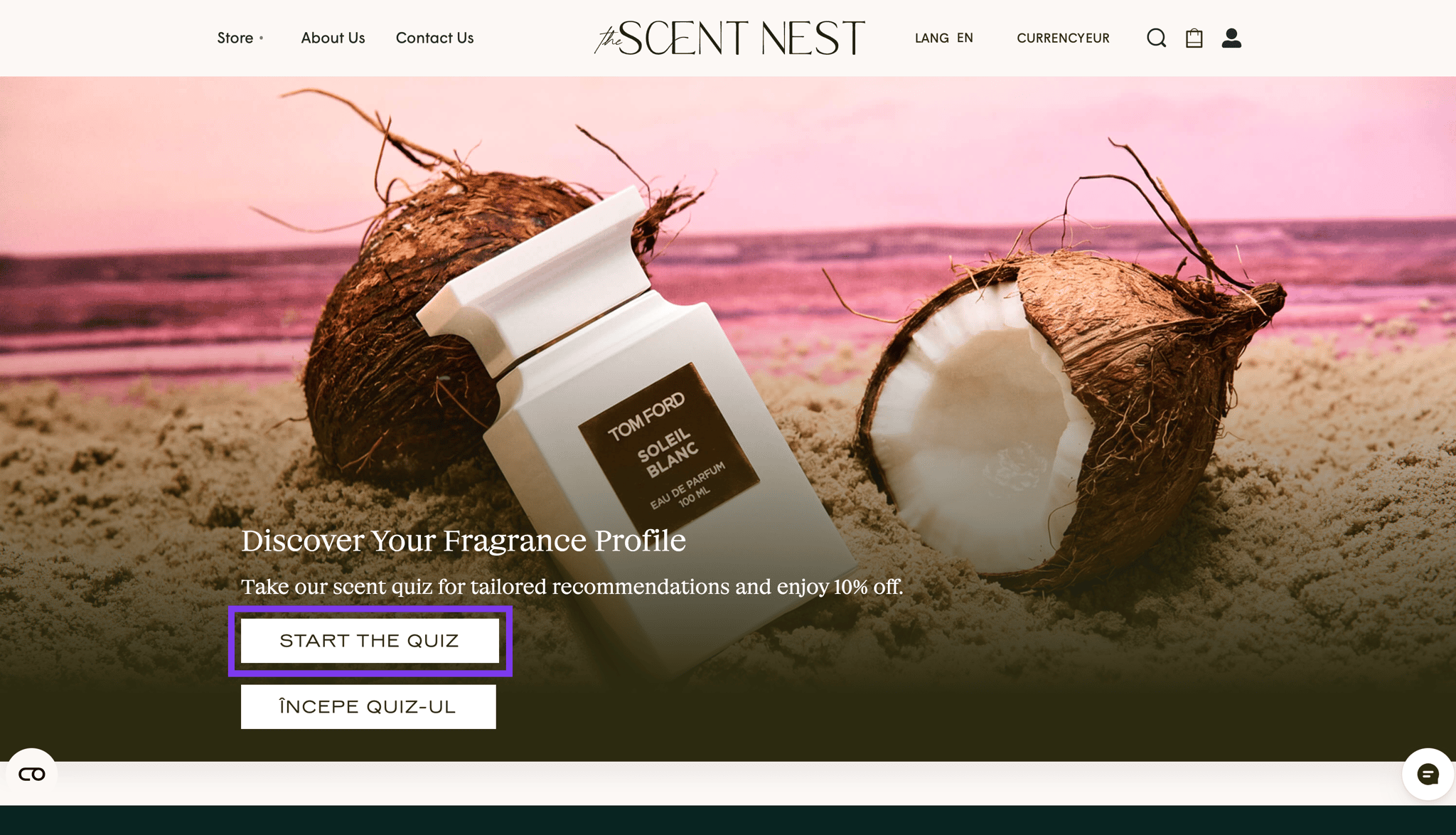
That profile does double duty. It converts on the spot, and it captures the shopper's preferences as zero-party data, so The Scent Nest can retarget them with the right perfumes later and grow lifetime value instead of chasing one-off sales.
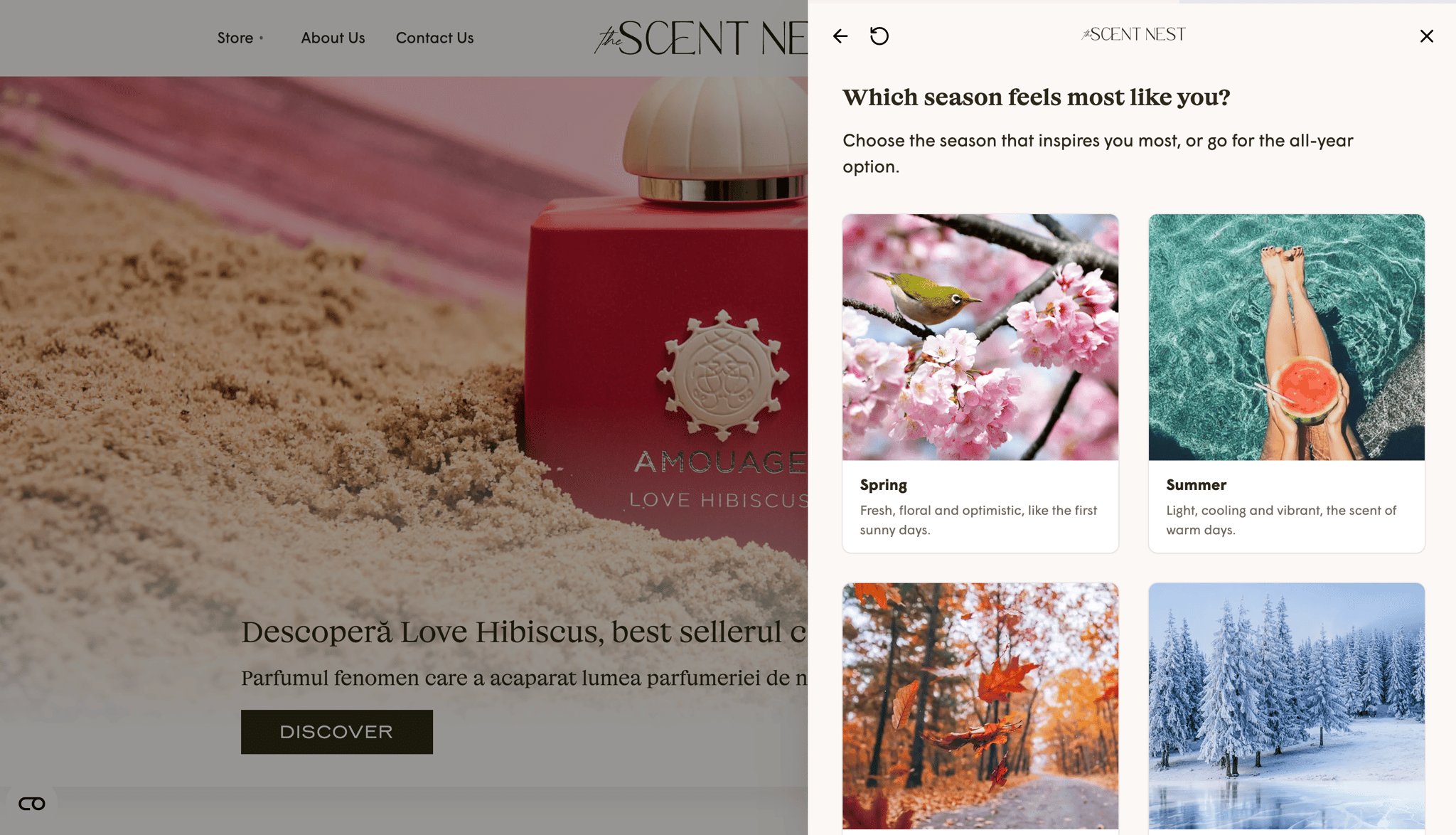
The result: a 20% increase in ROAS in a single month after switching on quiz funnels.
Why it works:it solves the category's core problem (you can't sample online) with data, and the scent profile keeps paying off long after the first visit.
What the best quiz examples have in common
Look across all five and the pattern is clear:
- They put the quiz where the decision is hard: on the PDP, in each category, in the paid funnel, not buried in the nav.
- They capture and use the data. Every one syncs answers to an email or data platform (see integrations), so the quiz keeps paying off after the visit.
- They match the format to the catalog: one quiz for a focused range, finders-everywhere for broad or technical ones.
- They treat it as a system, not a gimmick: guidance is woven through the store, not stapled on.
Build your own
Every store here turned "too much choice" into "here's the one for you," and got a zero-party data engine as a bonus. You can do the same: with bluebarry, your first quiz can be live in about two days, matched to your catalog and synced to your email stack.
Try it now. Drop in your store URL and generate a quiz in seconds: